

If you are thinking about selling your home in Wake County this year, one of the first questions you are probably asking is: what is my bottom line? What am I actually going to put in my pocket at closing?
It is a fair question — and one that deserves a straight answer. I have been selling homes in Wake County since 2009, and one of the things I hear most often from sellers is that the closing costs surprised them. Not always in a bad way, but they were surprised.
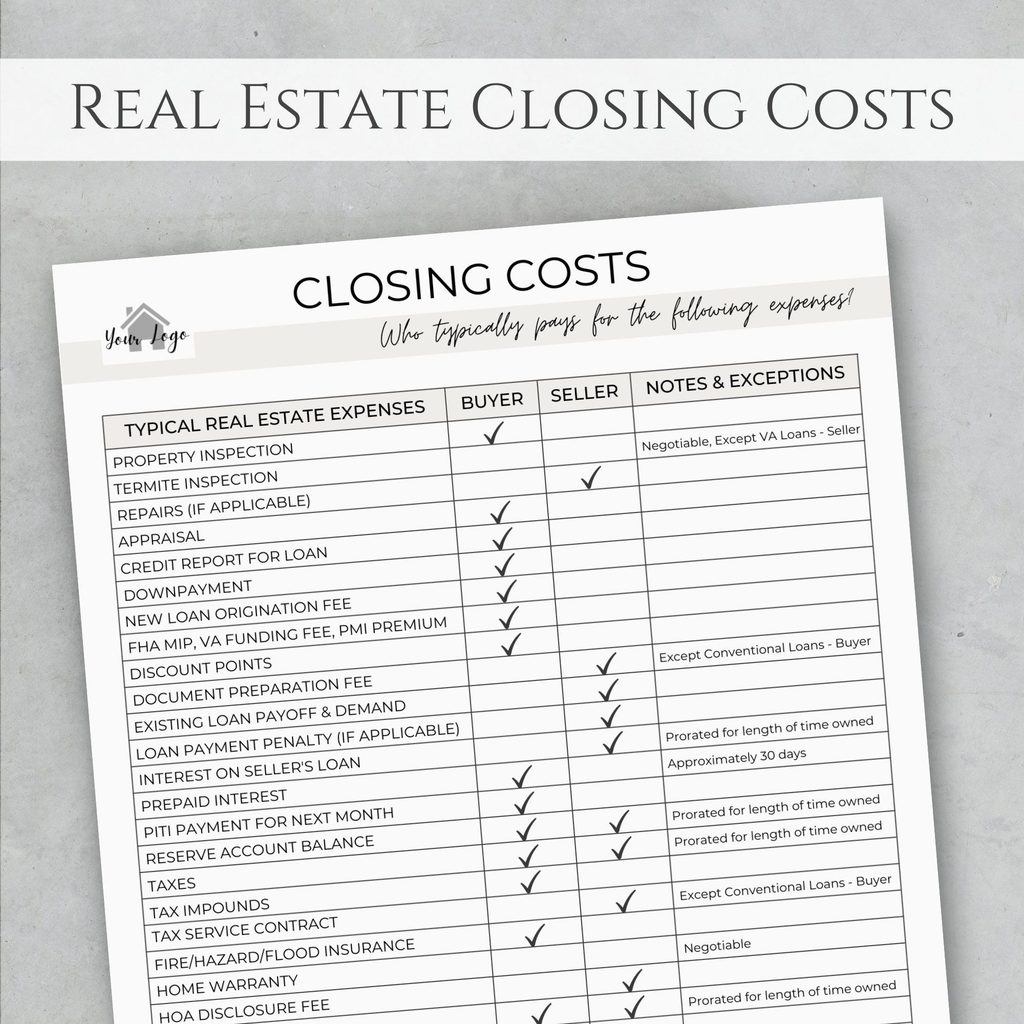
On a $500,000 sale, plan on roughly $27,000 in closing costs, but let me break it down for you the way I would sitting at your table.
The Big Picture: What Sellers Pay at Closing in NC
When you sell a home in Wake County, there are five main categories of costs you need to understand:
- Listing agent commission
- Buyer’s agent fee
- Attorney fees
- Revenue stamps (NC transfer tax)
- Prorated property taxes
Let’s walk through each one.
1. Listing Agent Commission
This presentation of agent commission or compensation changed in 2024 and a lot of sellers are still catching up with what actually happened.
As a result of a class action lawsuit settlement involving the National Association of Realtors, the way commissions are presented and explained to sellers changed in August 2024. The bottom line for you as a seller: listing agent commission has always been negotiable, and it still is. This was a nationwide case and change. NC was already doing a lot of what is now required. What changed is that it now has to be discussed and disclosed more clearly upfront.
When you interview agents, ask them directly what they charge and what you get for it. The range you will typically see in the Triangle market is somewhere between 2% and 3% of the sale price for the listing side. There are no additional service fees or junk charges with a good agent — the commission is the commission, and you only pay it if the home closes.
2. Buyer’s Agent Fee
This is the other piece that changed in 2024 and probably generates the most confusion.
Before August 2024, the total commission was typically presented as one lump sum — say 5% or 6% — and the listing agent split it with the buyer’s agent at closing. That structure still exists, but it is now broken into two separate, clearly disclosed line items. This had been broken up on the NC paperwork for years, but now it’s even more clearly defined.
Here is my honest take on this: you do not have to offer a buyer’s agent fee. But I would strongly encourage you to.
Here is why. If you offer a buyer’s agent fee upfront, your listing agent can make sure every buyer’s agent knows the fee up front, so no one is surprised. That means no buyers get filtered out because their agent is hesitant to show a home where compensation is unclear. It also means you are not negotiating price, contract terms, AND agent compensation all at once when an offer comes in — because that gets messy fast.
Offering the fee upfront is a known, controlled number. It keeps the process cleaner and your buyer pool larger. You know what to expect for a buyer’s agent from the start. Like the listing commission, the buyer’s agent fee is negotiable — both when you list and during contract negotiations.
3. Attorney Fees
North Carolina is an attorney state, which means an attorney is required to handle the closing. For sellers specifically, the attorney’s role is more limited than it is for buyers — they prepare the deed, handle the associated documents, and record everything with the Wake County Register of Deeds.
Because the seller’s role in the closing is more straightforward, the attorney fee on the seller side is typically modest — often in the range of a few hundred dollars. Your attorney will give you a clear number upfront so there are no surprises. The buyer normally selects the attorney. I normally estimate this fee around $300-350 for a seller.
4. Revenue Stamps (NC Transfer Tax)
This one surprises a lot of first-time sellers because it is not something most people think about until they see it on the closing disclosure.
Revenue stamps are a fee charged by the state of North Carolina for the right to transfer real property. Nearly every seller pays this. The rate is $1.00 per $500 of the sale price, or $2.00 per $1,000. On a $500,000 home that works out to $1,000.
It is not a huge number relative to the overall transaction, but it is worth knowing about going in.
5. Prorated Property Taxes
North Carolina property taxes are paid in arrears — meaning you pay the current year’s taxes near the end of the year. When you sell your home, you will owe the buyer a credit for the portion of the year you owned the home before closing.
For example, if you close on March 31st, you have owned the home for roughly the first quarter of the year. You will credit the buyer for that portion of the annual tax bill at closing. They will receive the full tax bill in late summer and pay the bill before January 5, 2027, to avoid late fees, but your credit makes them whole for the time you owned it.
The exact amount depends on your closing date and your annual tax bill. Your agent or attorney can estimate this number for you early in the process, so it is not a surprise. If you have a mortgage, you probably also have an escrow account that is setting money aside for taxes and insurance. These funds are usually refunded to the seller 3-4 weeks after closing.
Putting It All Together: A Real Example at $500,000
Let me show you what this actually looks like on a $500,000 home in Wake County, assuming a March closing date.
| Cost | Amount |
| Listing agent commission (2.5% example) | $12,500 |
| Buyer’s agent fee (2.5% example) | $12,500 |
| Attorney fee (seller side, estimated) | $350 |
| Revenue stamps | $1,000 |
| Prorated taxes (Jan 1 – Mar 31, estimated) | $750 |
| Estimated total seller costs | $27,100 |
| Estimated net to seller | $472,900 |
A few things worth noting about this example:
- Commission percentages are examples only — this is a negotiable item and will vary
- Attorney fees vary by firm
- The tax proration estimate is based on an average Wake County tax rate and will vary by property
- This does not account for any pre-marketing costs, repairs, or outstanding liens on the property
What About Opendoor and iBuyers?
I get this question a lot, especially in the Triangle market where Opendoor is active.
The honest answer is that Opendoor and similar iBuyers will put money in your pocket faster and with less hassle. If speed and certainty are your top priorities, that has real value.
But the net — what you actually walk away with — is typically meaningfully lower than what you would net by listing on the open market with a good agent. iBuyers charge service fees that are often higher than traditional commissions, and their offer prices tend to reflect the convenience premium they are charging you. Their goal is to make money on both sides: buying the home and reselling the home.
My goal with every seller is to put the most money possible in your pocket with the least amount of fees. It is not always the fastest path, but for most sellers the difference in net proceeds is worth the extra time.
The Bottom Line
Selling a home in Wake County in 2026 comes with real costs — but none of them should be a surprise if you have the right agent walking you through the process from the start. A good net sheet prepared early gives you a clear picture of what you will walk away with at any given price, so you can make decisions with confidence.
If you are thinking about selling and want a personalized net sheet for your home, I am happy to put one together for you — no obligation, no pressure.
Jonathan Owens has been a full-time licensed real estate agent in the Triangle since 2009, specializing in Wake, Johnston, and Harnett counties. He is currently with Choice Residential in Apex, NC.
📞 919-413-7197 🌐 owensrealtyteam.com 📧 j@owensrealtyteam.com
This post is intended for general informational purposes. Closing costs vary by transaction. Always consult with your real estate agent and attorney for figures specific to your situation.